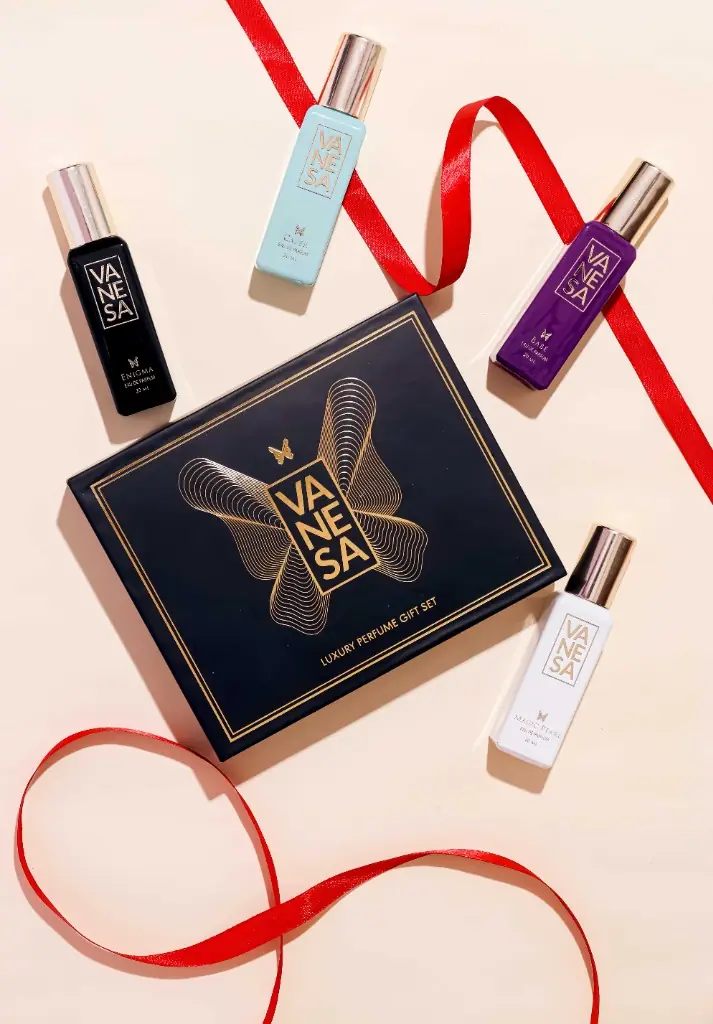
If you are launching or scaling an ecommerce brand in India, product photography is one of your most important investments. Yet pricing remains confusing for most founders. Studios quote anywhere from Rs 200 to Rs 5,000 per image, and it is hard to know what you are actually paying for.
This guide breaks down realistic pricing across different types of product photography in India, explains what affects costs, and helps you think about photography as a conversion investment rather than a line-item expense.
Two questions come up constantly alongside this one: what Amazon itself charges for a photoshoot, which is the number a lot of sellers quietly benchmark against, and the three types of product photography, which is what you are actually being quoted for.
White Background Photography Pricing
White background images are the foundation of any ecommerce listing. These are mandatory for Amazon, Flipkart, and most marketplaces. In India, pricing typically falls into three tiers.
Budget studios charge Rs 150 to Rs 400 per image. These are often high-volume operations with minimal styling and basic equipment. The images are functional but rarely exceptional. Mid-range studios charge Rs 400 to Rs 900 per image, offering better lighting, cleaner editing, and more attention to detail. Premium studios and agencies charge Rs 900 to Rs 2,000 per image, providing professional-grade equipment, experienced photographers, and meticulous post-production.
For most ecommerce brands, the mid-range tier offers the best balance of quality and cost. However, if you are selling premium products or competing in saturated categories, the difference in quality from premium studios can directly impact your conversion rates.
Lifestyle Photography Pricing
Lifestyle images show your product in context. They help customers imagine the product in their own lives and are essential for D2C websites and social media. Pricing here is more variable because it depends on location, props, and complexity.
Simple lifestyle setups in-studio cost Rs 800 to Rs 2,000 per image. These use curated backgrounds and props without models. On-location shoots range from Rs 2,000 to Rs 5,000 per image, factoring in travel, permits, and additional setup time. Model-inclusive lifestyle shoots start at Rs 3,000 per image and can go significantly higher depending on the model and usage rights.
Many brands underestimate the value of lifestyle photography. A single well-executed lifestyle image can outperform five mediocre white background shots in terms of engagement and conversion.
Model Photography Pricing
If your product requires human interaction to be understood, such as apparel, accessories, or personal care items, model photography becomes necessary. Costs include both the photographer's fees and model fees.
Amateur or new models cost Rs 5,000 to Rs 15,000 per session. Professional models with agency representation charge Rs 20,000 to Rs 80,000 per session. Celebrity or influencer models command Rs 1 lakh and above. Photographer fees for model shoots typically range from Rs 15,000 to Rs 50,000 per day, depending on experience and deliverables.
Product Videography Pricing
Video content is increasingly important for ecommerce. Short product videos can increase time on page and improve conversion rates. Simple product rotation videos cost Rs 2,000 to Rs 5,000 per product. Styled product videos with motion graphics range from Rs 5,000 to Rs 15,000. Full production videos with models, locations, and editing start at Rs 25,000 and can exceed Rs 1 lakh.
What Affects Photography Pricing
Several factors influence what you will pay. Product complexity matters significantly. Jewelry with intricate details requires more time and skill than a plain t-shirt. The same is true of beauty packaging, where reflective glass and metallic finishes drive the cost more than the product inside does. Size matters just as much at the other end of the scale: furniture photography is priced on space and time rather than per item. Volume discounts are common. Shooting 50 products is more cost-effective per unit than shooting 5. Turnaround time affects pricing. Rush jobs typically cost 20 to 50 percent more. Usage rights can add to costs, especially for images used in paid advertising or national campaigns.
Styling requirements also impact pricing. Some products photograph well as-is. Others need steaming, arranging, or custom props. Post-production complexity varies too. Basic color correction is standard, but advanced retouching, compositing, or background manipulation adds to the final cost. If you are weighing AI-generated images as the cheaper option, we compared them directly in AI product photography vs a real photoshoot.
Does Your City Change the Price?
Less than most people expect. The per-image rate is set by the product and the treatment, not by the pincode, and the tiers above hold across the country. What the city actually changes is logistics: how far the product has to travel, whether anyone from your team can attend the shoot, and whether an on-location day is practical at all.
Category matters as much as city. We have gone into the detail for cosmetic product photography, jewellery product photography and white background product photography, which are the three we are asked to quote most often.
The same is true for the job type, not just the category. A plain product shoot prices differently from an advertisement photoshoot built around a media plan, a single advertising photography hero frame, a Flipkart launch shoot against a deadline, or jewellery, which sits at the top of the range for reasons that have nothing to do with the item's value. Each has its own breakdown, since bundling them into one number the way a lot of quotes do hides more than it explains.
We have written the local version of this for four cities: product photography cost in Ahmedabad, product photography cost in Bangalore, product photography cost in Chennai, and product shoot cost in Delhi. The ranges are the same in each. What differs is the courier time and who turns up on the day. The same courier-in model runs for brands shipping from further out too, including Surat, Jaipur and Kolkata, where the per-image rate does not change but the transit time does.
Why Cheap Photography Often Costs More
It is tempting to choose the lowest quote, but cheap photography often creates hidden costs. Poor images lead to lower click-through rates, which means you pay more for the same traffic. Low-quality visuals increase return rates because customers receive products that look different from what they expected. Inconsistent image quality damages brand perception over time, and on marketplaces like Amazon it shows up fastest, since a weak main image is the single most common reason a listing underperforms.
We have seen brands spend Rs 50,000 on cheap photography, then spend another Rs 80,000 reshooting everything six months later when they realized the original images were hurting their sales. The initial savings evaporated, and they lost months of potential revenue. If you are weighing bringing it in-house instead, how to set up a product photography studio covers the gear, software and expertise it actually takes.
Thinking About Photography as ROI
Instead of asking what photography costs, ask what it returns. If a Rs 1,500 image helps you sell 100 additional units at Rs 500 profit each, that image generated Rs 50,000 in value. The cost becomes irrelevant compared to the return.
Consider your average order value, your current conversion rate, and your traffic volume. Even a small improvement in conversion from better images can generate returns that dwarf the photography investment.
What is the average cost of product photography?
An average is misleading here, because studios quote in two different units and people compare them as if they were the same. Per image, India runs roughly Rs 150 to Rs 2,000 depending on the tier described above. For professional catalogue work the usual band is Rs 500 to Rs 1,500 per image, and a listing normally needs several images per product.
Before comparing any two quotes, check which unit each one is using and how many angles it includes. A Rs 200 per image quote that only covers one angle can cost more overall than a higher per image rate that covers the full set you actually need. If you want that worked through with real numbers rather than a rate alone, what a product shoot actually costs walks through how image count per product, not the per-image rate, is what usually decides the bill.
How much should I pay a photographer for a product shoot?
It depends on whether you are buying catalogue work or campaign work, and these are priced on completely different logic.
Catalogue work is volume work. You are paying for consistency across many SKUs, and the sensible unit is per image. Rs 500 to Rs 1,500 per image is a fair band for professional work in India, dropping as the batch grows.
Campaign work is a day rate, because you are paying for styling, props, art direction and the time to get a handful of hero images exactly right. Day rates from Rs 20,000 up to well over a lakh are all real depending on the photographer and what the shoot involves.
Paying a campaign day rate for a catalogue job is the most common way brands overspend on photography. The reverse, expecting hero images at a catalogue rate, is the most common way they end up disappointed.
How much do I charge for product photography?
If you are the photographer rather than the buyer, price on time and output rather than per click of the shutter. Work out how many products you can genuinely finish in a day at the quality you want to be known for, including prep, shooting and retouching, then divide your target day rate by that number.
Most photographers starting out underprice by forgetting retouching and reshoots, which is where the hours actually go. Charge for revisions beyond a set number, and be specific about how many angles a quote covers, or you will end up absorbing the difference on every job.
Product photography charges in India: what is included
Studios use pricing, charges and rates to mean slightly different things, and the confusion is not accidental. A quoted rate usually covers the shoot. What it may not cover is retouching depth, extra angles, reshoots, product handling, or usage rights for paid advertising.
Before comparing two sets of prices, get both onto the same basis. Ask what one unit of the quote actually buys: how many angles, what level of retouching, how many revisions, and whether the images are cleared for use in ads as well as listings. Two quotes that look forty percent apart often close to almost nothing once you do that, and occasionally the cheaper one turns out to be the expensive one.
The other thing worth asking is what happens when something goes wrong. If a batch comes back with the colour off, is the reshoot included or billed? Studios that answer that clearly tend to be the ones that rarely need to.
How to Evaluate a Photography Partner
Look at their portfolio, specifically work in your product category. Ask about their process, including how they handle product preparation, shooting, and editing. Request references from brands similar to yours. Understand their revision policy and turnaround times.
Do not make decisions based on price alone. A studio that costs 30 percent more but delivers images that convert 10 percent better is almost always the smarter investment.
Getting Started
If you are unsure about committing to a full shoot, consider starting small. Many professional studios, including ours, offer trial packages or complimentary sample shoots so you can evaluate quality before committing to larger volumes.
Photography is not a cost center. It is a conversion lever. Evaluate it accordingly, and invest in quality that matches your brand ambitions.