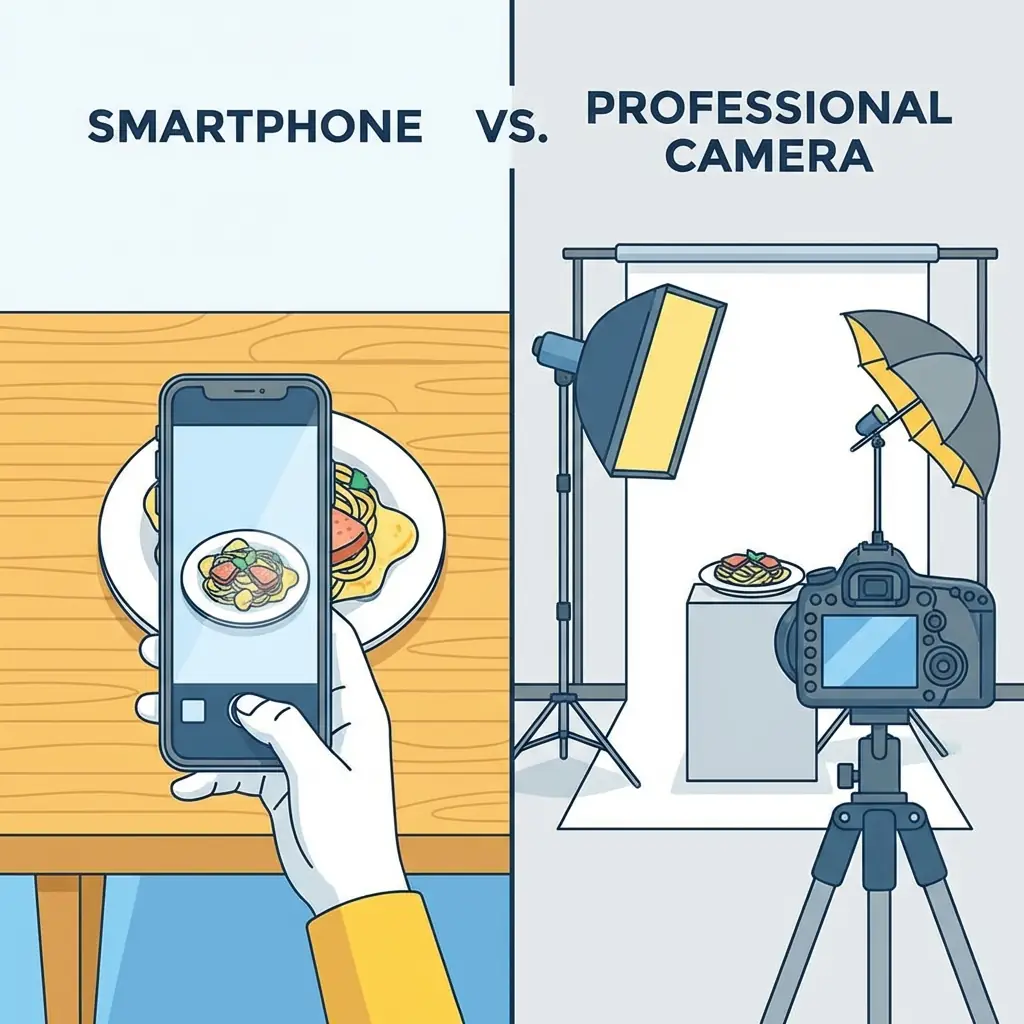
Many ecommerce businesses start with DIY photography out of necessity. Limited budgets and small catalogs make professional shoots seem premature. DIY can work initially, but there comes a point where it holds your business back.
Recognizing when to upgrade matters. Switching too early wastes resources. Switching too late costs sales. This guide helps you identify the right timing for your business.
When DIY Photography Works
DIY makes sense in specific circumstances. If you are testing product concepts before committing to inventory, rough images suffice for gathering initial feedback. The goal is validation, not conversion optimization.
If you sell very few products with limited traffic, the absolute impact of better images is small. The difference between 2 percent and 2.5 percent conversion matters little when you have 100 visitors per month.
If your products are genuinely simple and you have reasonable photography skills, you might achieve acceptable results. Some product categories are more forgiving than others.
Signs You Should Upgrade
Certain triggers suggest DIY has become a liability rather than a practical choice.
Scaling advertising spend is a major trigger. When you invest money to drive traffic, conversion rate directly affects return on ad spend. Poor images mean you pay for visitors who do not buy. As ad budgets grow, the cost of low conversion grows proportionally. Professional images improve the return on your marketing investment.
Launching on marketplaces creates new requirements. Amazon and Flipkart have specific image standards. DIY images that worked on your basic website may not meet marketplace requirements or compete effectively against professional listings.
Expanding your catalog makes DIY unsustainable. Shooting one product is manageable. Shooting fifty while running a business is overwhelming. At some point, photography demands more time than you can reasonably allocate.
Entering competitive categories changes the equation. If your competitors use professional photography, DIY images stand out negatively. You signal that you are less serious, less established, less trustworthy. This perception costs sales regardless of actual product quality.
The Hidden Costs of Continuing DIY
DIY photography costs more than the visible expense of equipment. Your time has value. Hours spent setting up, shooting, and editing cannot be spent on other business activities. Calculate your effective hourly rate and apply it to photography time.
Learning curves extend timelines. Getting shots right takes longer when you are learning as you go. Product launches delay. Marketing campaigns wait. Speed matters in ecommerce.
Inconsistency accumulates. Without professional standards, quality varies across your catalog. Some products look decent. Others look amateur. This inconsistency damages overall brand perception.
Suboptimal results cost sales. Even if DIY images seem acceptable, they may be costing conversions you never see. The counterfactual is invisible, but it is real. Better images would generate more sales. You just cannot see the sales you are not making.
Making the Transition
When you decide to upgrade, approach it systematically. You do not need to reshoot everything immediately. Prioritize based on impact.
Start with your highest-traffic products. These benefit most from improved conversion. If 20 percent of your products generate 80 percent of your sales, focus there first.
Start with new product launches. Going forward, ensure every new product gets professional photography. This prevents the gap from widening while you address existing products.
Start with your main images. On marketplaces, the main image affects both click-through and first impressions. Upgrading main images delivers quick impact even before you redo secondary images.
Choosing a Photography Partner
Look for photographers or studios with relevant experience. Product photography for ecommerce differs from other commercial photography. They should understand marketplace requirements, conversion optimization, and the specific needs of online sellers.
Request samples in your product category. Photographing jewelry requires different skills than photographing apparel or electronics. Past work similar to your needs predicts future results.
Discuss ongoing needs, not just immediate projects. As your business grows, photography needs grow too. A partner who can scale with you saves transition costs later.
Testing Before Committing
Consider a limited trial before large commitments. Shoot one or two products professionally and compare results. Measure any conversion difference. This data informs your broader investment decision.
Many professional photographers offer trial packages for exactly this purpose. The small upfront cost provides evidence to support larger decisions.
The Upgrade Mindset
Upgrading to professional photography is not an expense. It is an investment in conversion infrastructure. Better images support every sale you make, every visitor who arrives, every ad dollar you spend.
When DIY photography no longer serves your business, recognize it and act. The longer you delay, the more sales you forfeit. The transition costs less than continuing with inadequate images.